

Rite of Eucharistic Exposition and Benediction
When the Blessed Sacrament is exposed for adoration, the Church gathers to honor Christ truly present. This guide follows the common parish order: Exposition with O Salutaris, a time of private prayer before the monstrance, Benediction with Tantum Ergo and the Divine Praises, and Reposition. Use it at a Holy Hour, or adapt the adoration suggestions when you visit the tabernacle alone.
Structure and pastoral suggestions adapted from the Adoration Prayer Card of St. Robert Bellarmine Catholic Church, Blue Springs. Hymns and praises use traditional liturgical forms (St. Thomas Aquinas; Holy Communion and Worship of the Eucharistic Mystery outside Mass).
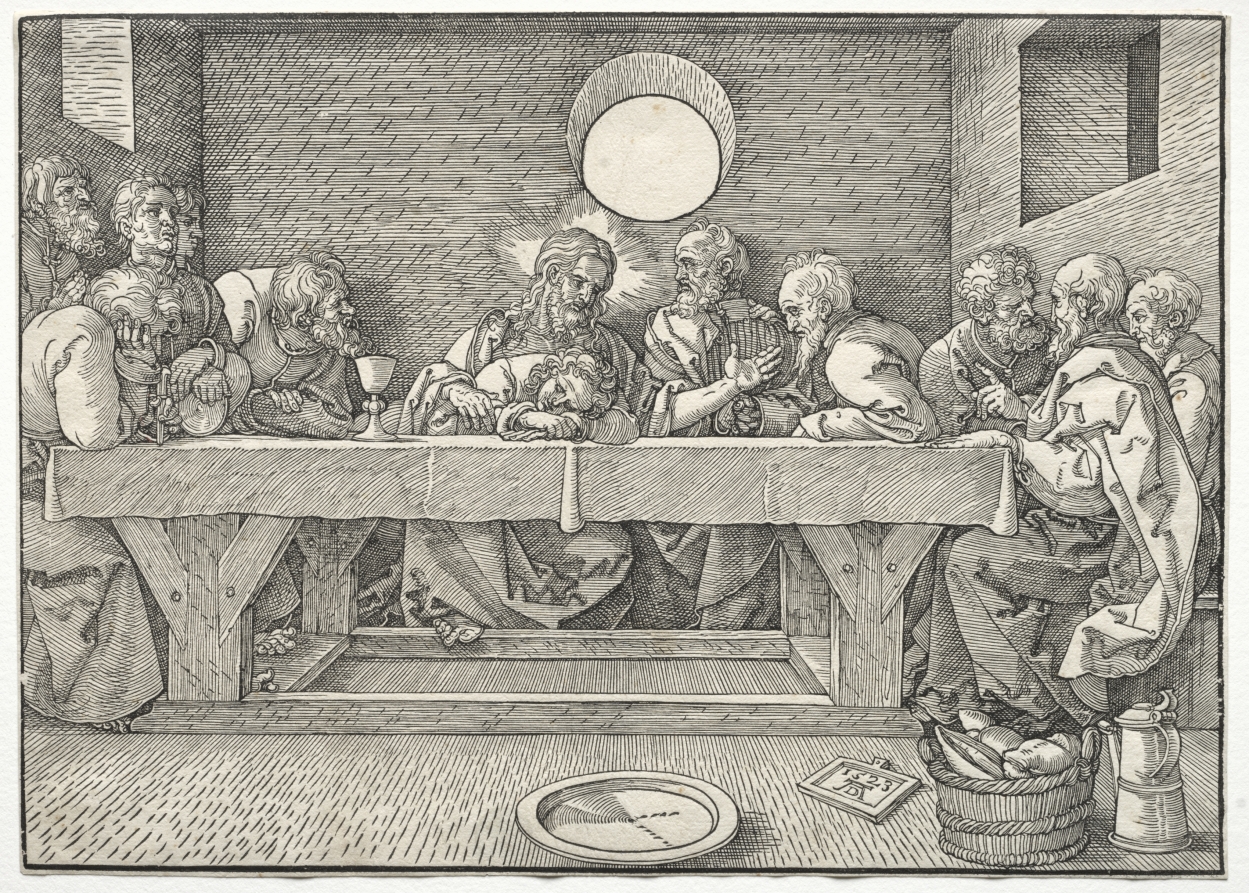
Exposition of the Blessed Sacrament
When the Blessed Sacrament enters and exits the church, kneel as a sign of respect. During the rest of the time, assume a posture that helps you pray and listen.
1.The presider enters and places the Blessed Sacrament in the monstrance on the altar. Kneel.
2.Pray O Sacrament Most Holy three times (text below).
3.Sing O Salutaris Hostia (O Saving Victim), or another appropriate Eucharistic hymn.
4.The presider may incense the monstrance.
5.Begin the private portion of adoration.
O Sacrament Most Holy
O Sacrament Most Holy,
O Sacrament Divine,
All Praise and All Thanksgiving
Be Every Moment Thine.
Prayed three times. Customary when the Blessed Sacrament is placed on the altar at Exposition, and again three times before it is removed at Reposition. Traditional Eucharistic refrain.
O Salutaris Hostia (Latin)
O salutaris hostia,
quae caeli pandis ostium,
bella premunt hostilia;
da robur, fer auxilium.
Uni trinoque Domino
sit sempiterna gloria:
qui vitam sine termino
nobis donet in patria. Amen.
O Salutaris Hostia (English)
O saving Victim, opening wide
the gate of heaven to all below:
our foes press on from every side;
Thine aid supply, Thy strength bestow.
To Thy great Name be endless praise,
immortal Godhead, One in Three!
O grant us endless length of days
in our true native land with Thee. Amen.
Source: O Salutaris Hostia — final stanzas of Verbum supernum (St. Thomas Aquinas); traditional English translation. See also o-salutaris-hostia in the prayer catalog.
Adoration of the Blessed Sacrament
“Be still and know that I am God.” (Psalm 46:10) This is your time to bring your heart — your worries, joys, and hopes — before a God who loves you. Consider the following suggestions during private Eucharistic Adoration.
Pour out your heart to Jesus and adore Him
Spend a few moments in conversation with Our Lord in the Blessed Sacrament:
Tell Jesus what you are most thankful for.
Tell Jesus what you are most excited about.
Tell Jesus what you are worried or concerned about.
Tell Jesus what you are sorry for.
What does Jesus say to you about any of the above?
Ask Jesus for the help you need in the days to come.
Who needs your prayers? Pray to Jesus for this person or these people.
What else do you want to ask Jesus for or about?
Ask Jesus what He wants you to do for Him in the days to come.
Meditate using Sacred Scripture
Choose a passage from the Bible. Read the words and ask God to let the passage speak to you. The following texts are proposed for private meditation.
Old Testament — (Exodus 40:4–6) (Exodus 40:8–9) (Numbers 20:1–13) (Isaiah 49:13–16) (Jeremiah 31:1–4) (Jeremiah 31:31–34) (Ezekiel 36:24–28) (Psalm 6:1–10) (Psalm 8:1–9) (Psalm 13:1–6) (Psalm 15:1–5) (Psalm 19:1–14) (Psalm 23:1–6) (Psalm 25:1–22) (Psalm 27:1–14) (Psalm 34:1–22) (Psalm 40:1–17) (Psalm 51:1–19) (Psalm 148:1–14).
New Testament — (Matthew 5:1–12) (Matthew 5:21–24) (Matthew 6:1–14) (Matthew 7:7–12) (Matthew 13:18–23) (Matthew 14:22–23) (Matthew 26:36–45) (Luke 1:46–55) (Luke 1:67–79) (Luke 4:1–13) (Luke 6:27–44) (Luke 10:25–28) (Luke 12:16–21) (Luke 12:35–40) (Luke 15:1–10) (Luke 15:11–24) (John 1:1–5) (John 1:14–18) (John 6:48–58) (John 7:14–18) (John 7:37–39) (John 10:11–18) (John 13:12–17) (John 13:34–35) (John 17:20–26) (Romans 8:28–39) (1 Thessalonians 4:13–18) (1 Thessalonians 5:14–25) (Ephesians 1:3–10) (Ephesians 3:8–12) (Ephesians 3:14–19) (Hebrews 1:1–4) (Hebrews 9:11–14) (Hebrews 9:22–28) (Hebrews 11:1) (1 Corinthians 10:16–17) (1 Corinthians 11:23–32) (1 John 4:7–12) (Philippians 2:5–11) (Revelation 11:17–18) (Revelation 12:10–12).
Pray the Rosary
Ask Mary to join you as you gaze on Christ in the monstrance and pray the Rosary.
Read the life of a saint
Most holy men and women have had a great devotion to Our Lord in the Eucharist. Read about them and learn from their examples.
Sit quietly and “be” in the presence of God
Think of a visit to the Blessed Sacrament as coming to see your best friend. Sit quietly and enjoy being in each other’s company. Instead of talking to the Lord, try listening to what He wants to tell you.
Thanksgiving after Adoration
Lord Jesus, I thank you for listening to me
and for speaking to my heart.
I know that you are always with me.
Help me to follow you more closely and to love others. Amen.
Source: pastoral suggestions for private adoration adapted from the St. Robert Bellarmine Adoration Prayer Card (Blue Springs).
Benediction of the Blessed Sacrament
1.Kneel. The presider may incense the monstrance.
2.Sing Tantum Ergo (Down in Adoration Falling).
3.Remain kneeling for the versicle, collect, blessing, and Divine Praises.
Tantum Ergo (Latin)
Tantum ergo Sacramentum
veneremur cernui:
et antiquum documentum
novo cedat ritui:
praestet fides supplementum
sensuum defectui.
Genitori, Genitoque
laus et iubilatio,
salus, honor, virtus quoque
sit et benedictio:
procedenti ab utroque
compar sit laudatio.
Amen. Alleluia.
Tantum Ergo (English)
Down in adoration falling,
Lo! the sacred Host we hail;
Lo! o'er ancient forms departing,
newer rites of grace prevail;
faith for all defects supplying,
where the feeble senses fail.
To the everlasting Father,
and the Son who reigns on high,
with the Holy Ghost proceeding
forth from Each eternally,
be salvation, honor, blessing,
might and endless majesty.
Amen. Alleluia.
Source: Tantum ergo — stanzas from Pange lingua (St. Thomas Aquinas); traditional English translation. See also tantum-ergo in the prayer catalog.
Versicle
V. You have given them Bread from Heaven. (Alleluia)
R. Having all sweetness within it. (Alleluia)
Prayer after Tantum Ergo
Lord Jesus Christ, you gave us the Eucharist
as the memorial of your suffering and death.
May our worship of this sacrament of your Body and Blood
help us to experience the salvation you won for us
and the peace of the kingdom
where you live with the Father and the Holy Spirit,
one God, for ever and ever. Amen.
Source: common English collect used at Benediction (Holy Communion and Worship of the Eucharistic Mystery outside Mass).
Remain kneeling while the presider elevates the monstrance in blessing. Then recite the Divine Praises (the presider proclaims; the people repeat).
The Divine Praises
Blessed be God.
Blessed be his holy Name.
Blessed be Jesus Christ, true God and true man.
Blessed be the Name of Jesus.
Blessed be his most Sacred Heart.
Blessed be his most Precious Blood.
Blessed be Jesus in the most holy Sacrament of the altar.
Blessed be the Holy Spirit, the Paraclete.
Blessed be the great Mother of God, Mary most holy.
Blessed be her holy and Immaculate Conception.
Blessed be her glorious Assumption.
Blessed be the name of Mary, Virgin and Mother.
Blessed be Saint Joseph, her most chaste Spouse.
Blessed be God in his Angels and in his Saints. Amen.
Source: Divine Praises — Holy Communion and Worship of the Eucharistic Mystery outside Mass, no. 99. See also divine-praises in the prayer catalog.
Reposition of the Blessed Sacrament
Before the Blessed Sacrament is removed from the altar, pray O Sacrament Most Holy three times again (see the text under Exposition).
The presider reposes the Blessed Sacrament in the tabernacle while the people kneel. Then stand and sing Holy God, We Praise Thy Name (or another suitable hymn).
Holy God, We Praise Thy Name
Holy God, we praise thy name;
Lord of all, we bow before thee!
All on earth thy scepter claim,
All in heaven above adore thee.
Infinite thy vast domain,
Everlasting is thy reign.
Hark! the loud celestial hymn
Angel choirs above are raising;
Cherubim and Seraphim,
In unceasing chorus praising,
Fill the heavens with sweet accord:
Holy, holy, holy Lord!
Source: Holy God, We Praise Thy Name — traditional English translation of Te Deum (Ignaz Franz / Clarence A. Walworth).
Notes
• Related prayers in the catalog: O Salutaris Hostia (o-salutaris-hostia); Tantum Ergo (tantum-ergo); Divine Praises (divine-praises); Rosary (Joyful, Sorrowful, Glorious, Luminous Mysteries); Anima Christi; Adoro Te Devote.
• O Sacrament Most Holy is printed once above; pray it three times at Exposition when the Host is placed on the altar, and three times again before Reposition.
• If your parish uses different hymns or a shorter form, follow the local rite. The private-adoration suggestions may be used whenever you pray before the Blessed Sacrament, even without Exposition.
• Alleluia is added to the Bread from Heaven versicle in Eastertide (and omitted in penitential seasons where customary).